
Avoid a Driving While License Suspended Charge
By Getting a Valid Hardship License
Our highly rated DUI Defense Attorneys represent a large number of clients who come to us charged with the offense of “Driving While License Suspended or Revoked.” Many of these people lost their privilege to drive as a result of multiple DUI convictions. They are often surprised to learn that their new arrest for unlawful driving could have been avoided had they obtained a hardship license. This is true despite having suffered a five or ten year driver’s license revocation as the result of a second, third or fourth DUI conviction.
Florida’s DUI Special Supervision Services Program – Are You Eligible?
— Hardship Licenses for Multiple DUI Offenders —
Many law offices fail to inform their multiple offender DUI clients of the options that may be available to them for securing a hardship license. Likewise, it is rare for a Pinellas County court judge to point out at the time of sentencing that this remedy may be available. For these reasons, we are providing the following information to make you aware of the DUI Special Supervision Services Program.
If you have been convicted of a second DUI within five years of your first DUI, the Department of Highway Safety and Motor Vehicles (DHSMV) is required to suspend your license for a period of five years.* If you have been convicted of a third DUI within ten years from the date of conviction of any prior DUI (Note: many attorneys erroneously advise their clients that all three convictions must occur within a ten year period. This is simply untrue), DHSMV must suspend your license for a period of ten years.* If you have been convicted of a fourth DUI in your lifetime, regardless of the age of the prior offenses, you will suffer a “permanent” driver’s license suspension. Other minimum mandatory penalties that you may have suffered due to a multiple Florida DUI conviction can be viewed on our DUI Penalties page.
However, despite your multiple DUI convictions, the law allows you to apply for a hardship driver’s license that is restricted to “business” or “employment” purposes only. A “business” purposes only driver’s license allows you to drive for reasons related to work, school, church, doctor’s visits, and to the grocery store. An “employment” purposes only license allows driving that is limited to just work related driving. It is therefore more restrictive than the “business” purposes only license because it only allows driving that is necessary to get to and from work, and any on-the-job driving associated with your occupation.
Florida law mandates that a person with a second-time DUI conviction must wait one year from the date that DHSMV revoked their license before applying for a hardship license.
A person who has been convicted of a third DUI must wait a period of two years from the date of the ten-year revocation before applying for a hardship license.

A person who has been convicted of a fourth or subsequent DUI, must wait ten years from the date of the conviction, or from the date on which they finished their incarcerative sentence (whichever is later) before applying for a hardship license. (Applicants for a hardship license after a fourth or subsequent DUI conviction must wait until after October 1, 2010 to apply. After October 1, 2011, applicants need only wait five years from the date of conviction or from the date they finish serving an incarcerative sentence in order to be eligible to apply for a hardship license. See the 2010 Revision to Florida Statute 322.271(5)-(6); House Bill 971, Session Law Ch. 2010-233.) If DHSMV approves a hardship license, at least the first year of driving will be limited to “employment purposes only” (“D” restriction) which allows driving that is solely limited to and from work and any necessary on the job driving. See Florida Statute 322.271(1)(c)(2). Thereafter, DHSMV may allow driving on the more expansive “business purposes only” (“C” restriction) which allows driving that is “necessary to maintain livelihood.” See Florida Statute 322.271(1)(c)(1). Of course, a person applying for a hardship license after suffering a five year, ten year, or lifetime driver’s license revocation must have an ignition interlock device installed on his or her vehicle for a period of at least one year.
Getting Prepared for Obtaining a Multiple Offender DUI Hardship License
DHSMV will require that the applicant meet several criteria and complete a number of required tasks before awarding a restricted license. Generally, the applicant must also:
1.) Have completed multiple offender DUI school.
2.) Not driven during the period following the driver’s license revocation.
3.) Stayed drug and alcohol free for this same period of time.
4.) Complete any other terms or conditions specified by the safety council (usually these conditions require the applicant to show proof that they have completed the original court-ordered alcohol evaluation and treatment, if recommended, possess a valid photo ID, and to have a recent “revocation/conviction” report from the clerk of court reflecting that no other driving related offenses have occurred during the revocation period).
5.) Obtain an Ignition Interlock Device for a period of one, two, or five years, as may be required.
The Florida Legislature has limited the ability of some individuals with multiple DUI convictions to qualify for a hardship license during their suspension period. For example, if you lost your license for DUI Manslaughter and have a prior DUI conviction, DHSMV, by law, cannot provide a hardship license to you.
How the DUI Special Supervision Services Program Works
If DHSMV decides to award a multiple offender applicant a hardship license, they must be supervised by “a DUI program licensed by the department.” Typically, these DUI programs are administered by the local safety council that administers DUI school and the alcohol evaluation process. The safety council will assume supervision through what is called “DUI Special Supervision Services.” Once a hardship license has been awarded, the supervision program requires the restricted driver to fulfill certain commitments. At a minimum, these obligations will include:
- Reporting to the program at least three times a year (although many programs require monthly reporting).
- A second and more thorough alcohol abuse evaluation, along with treatment or counseling, if so recommended (this evaluation and any further treatment will be in addition to the treatment or counseling requirement imposed by the court as a consequence of the original DUI conviction).
- Any additional requirements imposed by DHSMV (these may include random alcohol and drug tests and relapse prevention counseling).

How Do I Apply for the Special Supervision Services Program?
Who to Contact if You Are a Pinellas County Resident
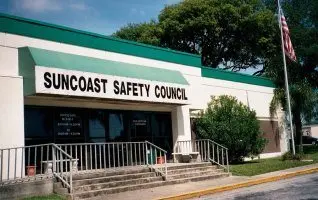
If you reside in St. Petersburg, Clearwater, Dunedin, Safety Harbor, Tarpon Springs, Palm Harbor, Largo, St. Pete Beach, Treasure Island, Gulfport, Pasadena, Indian Rocks Beach, Indian Shores, Redington Shores, Madeira Beach or Belleair and are interested in obtaining a hardship license after a multiple conviction DUI suspension, you should contact the Suncoast Safety Council at 727-442-0233. The Suncoast Safety Council’s website contains up-to-date information on the fees and costs associated with Special Supervision Services.
Avoid a Driving While License Suspended Charge
By Getting a Valid Hardship License
Our highly rated DUI Defense Attorneys represent a large number of clients who come to us charged with the offense of “Driving While License Suspended or Revoked.” Many of these people lost their privilege to drive as a result of multiple DUI convictions. They are often surprised to learn that their new arrest for unlawful driving could have been avoided had they obtained a hardship license. This is true despite having suffered a five or ten year driver’s license revocation as the result of a second, third or fourth DUI conviction.
Florida’s DUI Special Supervision Services Program – Are You Eligible?
— Hardship Licenses for Multiple DUI Offenders —
Many law offices fail to inform their multiple offender DUI clients of the options that may be available to them for securing a hardship license. Likewise, it is rare for a Pinellas County court judge to point out at the time of sentencing that this remedy may be available. For these reasons, we are providing the following information to make you aware of the DUI Special Supervision Services Program.
If you have been convicted of a second DUI within five years of your first DUI, the Department of Highway Safety and Motor Vehicles (DHSMV) is required to suspend your license for a period of five years.* If you have been convicted of a third DUI within ten years from the date of conviction of any prior DUI (Note: many attorneys erroneously advise their clients that all three convictions must occur within a ten year period. This is simply untrue), DHSMV must suspend your license for a period of ten years.* If you have been convicted of a fourth DUI in your lifetime, regardless of the age of the prior offenses, you will suffer a “permanent” driver’s license suspension. Other minimum mandatory penalties that you may have suffered due to a multiple Florida DUI conviction can be viewed on our DUI Penalties page.
However, despite your multiple DUI convictions, the law allows you to apply for a hardship driver’s license that is restricted to “business” or “employment” purposes only. A “business” purposes only driver’s license allows you to drive for reasons related to work, school, church, doctor’s visits, and to the grocery store. An “employment” purposes only license allows driving that is limited to just work related driving. It is therefore more restrictive than the “business” purposes only license because it only allows driving that is necessary to get to and from work, and any on-the-job driving associated with your occupation.
Florida law mandates that a person with a second-time DUI conviction must wait one year from the date that DHSMV revoked their license before applying for a hardship license.
A person who has been convicted of a third DUI must wait a period of two years from the date of the ten-year revocation before applying for a hardship license.
*For purposes of calculating whether a DUI conviction takes place within five or ten years of a prior DUI, you should look at the date of conviction of the prior DUI and ask whether it is within five years (or ten years, if applicable) of the date of your next DUI offense. See Florida Statute Section 316.193(6)(b)-(c).